Taking the ferry from England to France
Heading to France with your own car, campervan or bike? You have more choice than you might think: from the quick Dover hop to the longer Channel crossings that land you in Normandy or Brittany, and even the long haul to Spain for the south of France. We compare every route, with crossing times and first-hand notes from our own trips, so you can pick the one that fits your journey.
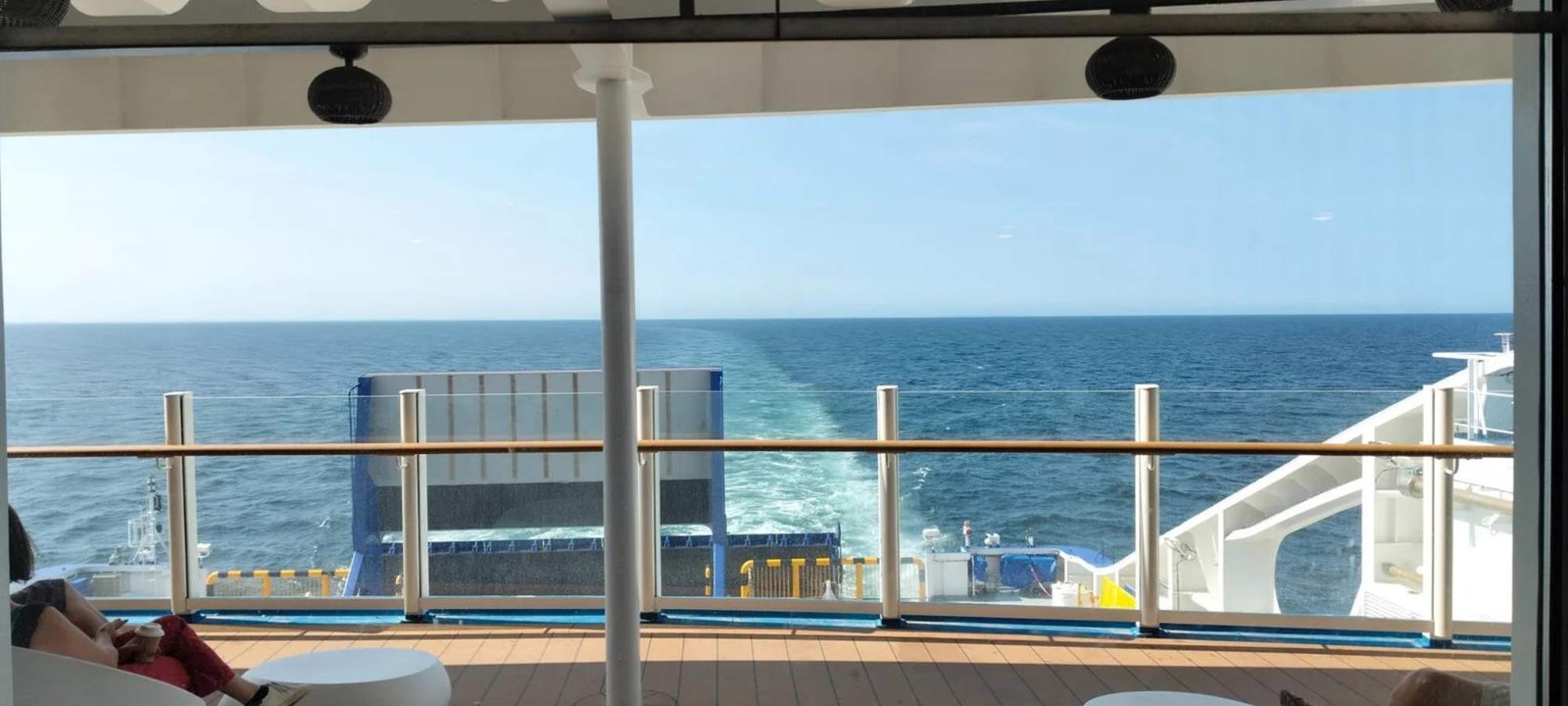
Heading for the south? Sail to Spain instead
If your destination is the south-west of France, the obvious Channel crossing leaves you with a brutal drive: it is around eight hours from Calais down to Bordeaux. There is a smarter way. Brittany Ferries sails from Plymouth and Portsmouth straight to Santander and Bilbao in northern Spain.
From Bilbao, the French border is barely an hour away, and Bordeaux around two and a half. You swap a long motorway slog for a night or two aboard a comfortable cruise-ferry, arriving rested and already in the right corner of the map. For the south of France, it is often the journey that makes the holiday.
See the southern routes →Popular routes
The crossings UK travellers ask about most. Pick yours, or use the planner above.
See the routes on the map
Every crossing we cover, the French ports they reach, and where you can drive on from there. Tap a route for crossing times, fares and a booking link, or tap a port to see its crossings.
This map shows ferry routes from England to France, with crossing times, fares and the ports they sail from. Tap a route for details, tap a port for its sailings, or zoom in for more.
Route updates for 2026
The France crossings are changing in 2026. Here is what we know so far, so you can plan around it.
Poole-Cherbourg will close
The Poole-Cherbourg route will close in November 2026. It is currently operated by the Barfleur, built in 1992, which will be sold.
Portsmouth-Cherbourg becomes the main Cherbourg service
Brittany Ferries plans a daily sailing from Portsmouth to Cherbourg, replacing the Poole-Cherbourg route as its main link to the port.
Portsmouth-Le Havre has stopped
The last sailings ran on 16 September 2026, two weeks early after a fault on the Commodore Clipper. Brittany Ferries says the route is no longer viable. Newhaven-Dieppe and Portsmouth-Caen are the closest crossings to Le Havre and Paris now. What to do instead.
Cherbourg-Rosslare continues
The Cotentin will be sold, but the Ireland-France service is expected to keep running using other vessels.
Guernsey gains a direct link with Cherbourg
From 1 November 2026, the Islander is scheduled to run a triangular Portsmouth-Guernsey-Cherbourg-Portsmouth service, while the Voyager continues on Poole-Guernsey, with selected sailings extending to Saint-Malo.
How to reach France by ferry
There is a crossing for every starting point and every destination. Here are the realistic ways to do it:
The quick hop, from the south east
Dover to Calais or Dunkirk crosses in around 90 minutes to two hours, with sailings all day. Best for Paris, the north, and anyone who wants the shortest time at sea before driving on.
Straight into Normandy or Brittany
Portsmouth, Poole and Plymouth sail to Caen, Cherbourg, St Malo and Roscoff. Longer crossings, often overnight, but they land you deep in the west with far less driving at the far end.
The long way south, via Spain
For the south of France, Brittany Ferries sails to Santander and Bilbao in northern Spain. A day or two aboard, then a short drive up into the south-west, instead of the long haul down from Calais.
Why we built this site
When we looked for clear information on ferries to France, we found the options scattered across operators and booking sites, with no one simply explaining which crossing makes sense from where you start. Booking sites are happy to sell you a ticket, but they will not tell you that Dieppe now lands you closest to Paris, or that sailing to Spain can save you a day of driving to the south.
So we built englandtofrance.co.uk to do exactly that. We have crossed the Channel to France more times than we can count, on most of the routes and with most of the operators. We would rather tell you what a crossing is genuinely like than repeat a brochure.
Which crossing actually lands you closest?
It is the question we get asked most, and the answer is not always obvious. Dover to Calais is quickest for Paris and the north. Portsmouth opens up Normandy, and Newhaven to Dieppe is now the closest landing to Paris by car. Plymouth and Poole reach Brittany and the Cotentin with far less driving than you would expect. The right crossing depends as much on where you set off as where you are going.
Driving in France: what UK drivers need to know
The Crit’Air sticker you need for the low-emission zones, the kit to carry, tolls, speed limits and the rules that catch UK drivers out. Everything to sort before you set off.
Frequently asked questions
Is there a direct ferry from the UK to France?
Yes, several. The short crossings run Dover to Calais and Dover to Dunkirk, while Newhaven sails to Dieppe. From the south coast, Portsmouth, Poole and Plymouth reach Normandy and Brittany. All carry cars, campervans and most carry foot passengers.
Which ferry to France is the cheapest?
The short Dover crossings usually have the lowest headline fares, especially booked ahead. But the cheapest crossing is not always the cheapest trip: a longer crossing that lands you closer to your destination can save a tank of fuel and a day of driving. Booking early almost always saves the most.
What is the quickest ferry to France?
Dover to Calais is the fastest, at around 90 minutes, with up to 15 sailings a day. Dover to Dunkirk is close behind at about two hours. Both are the natural choice if you are heading for Paris or the north of France.
How do I reach the south of France by ferry?
There is no direct ferry to the south of France. You can cross the Channel and drive south, around eight hours from Calais to Bordeaux, or sail from Plymouth or Portsmouth to Santander or Bilbao in northern Spain and drive up, often just two to three hours to the south-west.
Do I need anything special to drive in France?
Yes. France requires a Crit’Air emissions sticker for its low-emission zones, including Paris, and you should carry the usual kit such as a warning triangle, hi-vis vest and headlamp beam deflectors. See our driving guide for the full picture.